ServicesCeramic Window Film
Ceramic Window Film in South Houston
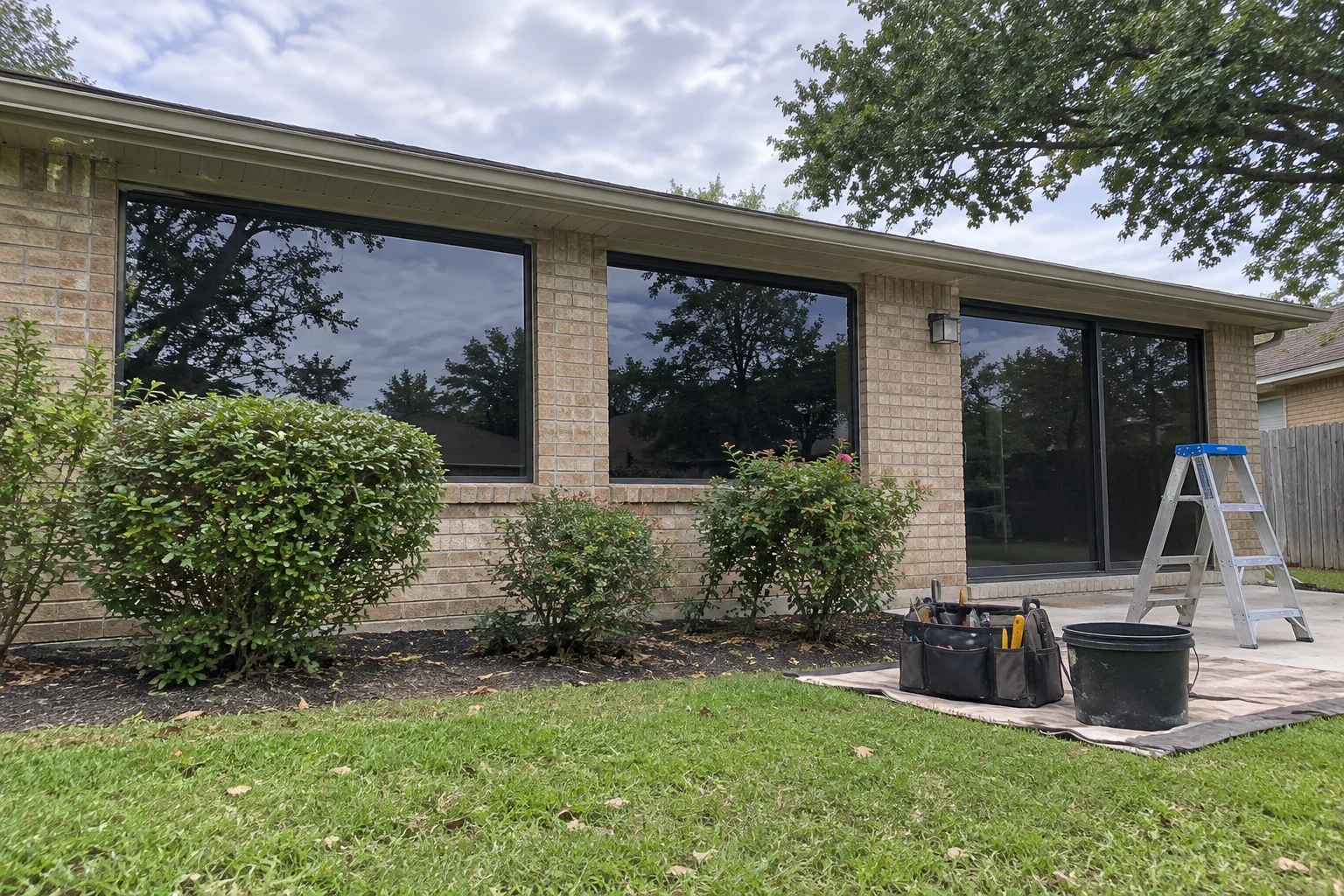
Ceramic film keeps a hot west-facing room comfortable without turning your windows dark or mirrored. We check the glass, frames and any past repairs first, then fit a film that suits the window it goes on, applied cleanly from inside your home.
How ceramic film works, and when to pick it
Instead of a metal layer, ceramic window film relies on microscopic ceramic particles that soak up and turn away infrared heat. You get strong heat rejection and UV protection from a film that stays clear, looks neutral from outside and leaves cell and Wi-Fi signals alone, which metallic films do not always do.
We recommend it when you want a cooler room without losing a plain view of the yard, and when a mirrored finish would look out of place on the house. With no metal inside to oxidize in Gulf Coast humidity, it also keeps its color over the years.
Older windows deserve a careful look before any film goes on. In one room you might find original single-pane glass, a replacement sash from an earlier remodel and a pane swapped out after a storm. We choose film for each of them individually instead of applying one product everywhere.
What your ceramic film installation includes
Glass and frame check
We note the glass type, whether panes are single or double, and the condition of seals, glazing putty and frames. Crumbling putty or a fogged insulated unit gets pointed out before we quote.
Film matched to each window
Ceramic films come in several shades and heat-rejection levels. We pick a grade that is safe for the specific glass, which matters on large older panes and on dual-pane units.
Removing old film
If a previous owner left bubbled or purple film behind, we strip it and clean off the adhesive so the new film bonds to bare glass.
Careful prep and installation
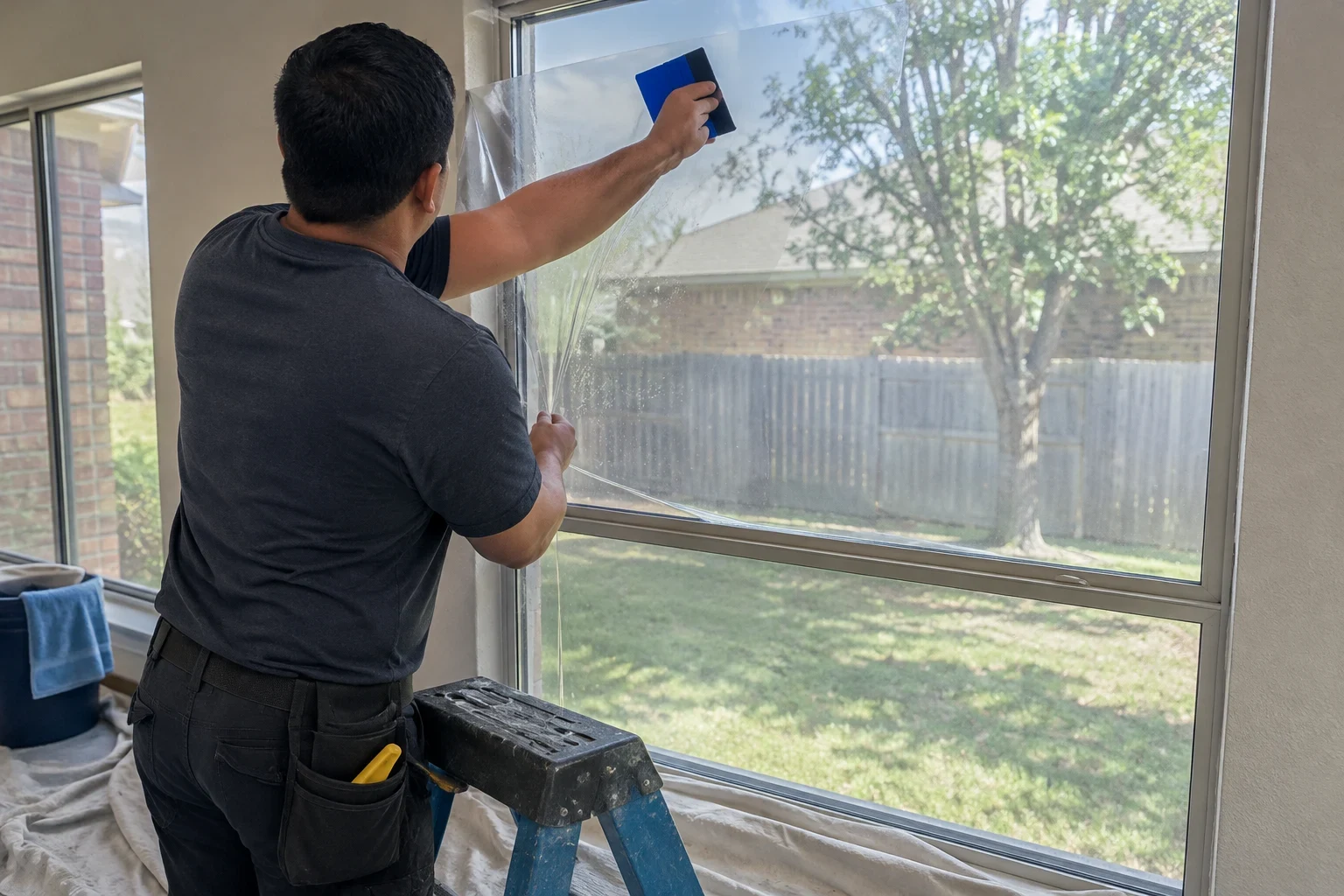
Glass is scraped and cleaned, edges are trimmed close to the frame, and water is squeegeed out so the finish reads clear. Drop cloths go down under every window we work on.
Who does the work, and what backs it
The people who come into your home are insured installers. This home work is covered by our lifetime warranty on home window tinting.
Signs ceramic film may suit your home
- One room runs hot every afternoon
- When a single room holds its heat well into the evening while the rest of the house has cooled, unprotected glass letting in direct sun is the usual cause.
- Furniture and floors are fading
- Bleached rugs, wood floors and upholstery near windows point to UV exposure. Ceramic film blocks the large majority of UV rays.
- You tried dark film and disliked it
- If an older tint made rooms gloomy or gave the house a mirror finish, a lighter ceramic film can manage heat without that look.
- Older glass that needs gentler handling
- Original panes and older double-pane units can be sensitive to heat buildup. A well-chosen ceramic film cuts solar gain without loading the glass the way some darker films do.
- Weak signal near the windows
- Metallic film can interfere with phone and router signals. Ceramic film is non-metal, so it makes a sensible replacement.
How the work goes
- 1
A phone call and a visit
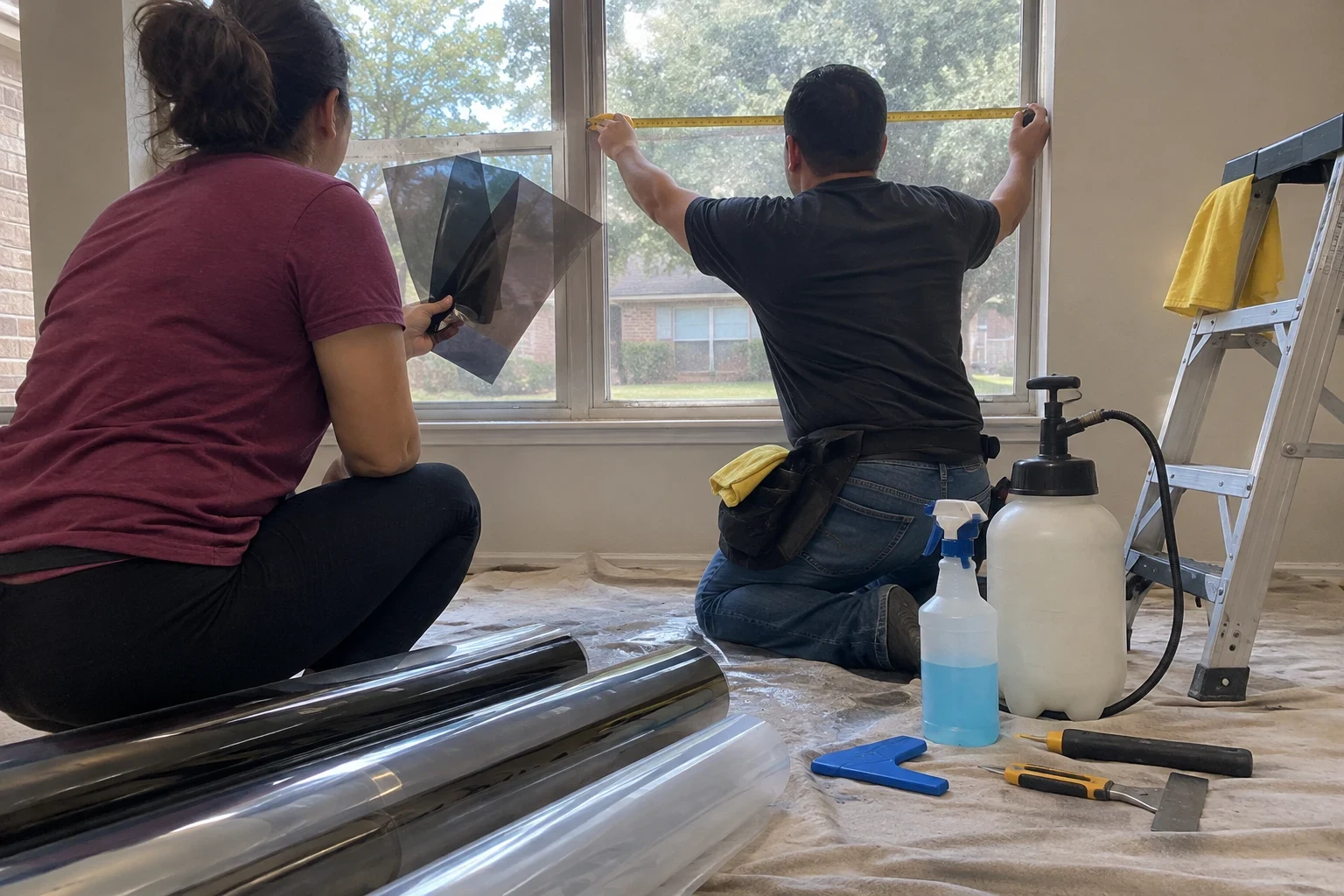
You tell us which rooms bother you. We come out, look over the windows and take measurements. Then we set a few film swatches right on the panes, so you judge each shade by the daylight in that room rather than from a brochure.
- 2
A written quote
Your quote lists each window, the film chosen and any old film removal or glass concerns we found. Nothing gets added later without a conversation first.
- 3
Installation day
We move small items away from the windows, put down protection and finish one window before starting the next. A typical house takes about a day, and there is no need to leave while we work.
- 4
Curing and walkthrough
Film can look a little hazy for a few days while trapped moisture dries. We walk the rooms with you, explain how to clean the glass, and leave the coverage details in writing.
What moves the price of ceramic film
The ceramic particles that give this film its clarity and heat rejection make it a step up in price from plain dyed tint. Beyond that, the windows in your house set most of the cost. Each line on your quote shows where the money goes.
- How much glass you have
- Pane count and size drive the total more than anything else. A pair of tall living room windows or a sliding patio door adds up quicker than several small bedroom windows.
- Which ceramic grade you choose
- Grades with stronger heat rejection carry a higher cost. If a mid-range grade will keep a room comfortable, we will say so.
- Taking off old tint
- Removing failed film and scrubbing off its glue is slow work, and it gets slower when the film has sat in the sun for many summers.
- Window style and reach
- Divided-light sashes with lots of small panes, upstairs glass and windows tucked behind shelving or built-ins all need extra time to trim and fit neatly.
Questions about ceramic window film
- Will ceramic film make my rooms dark?
- Only if you choose a darker shade. Many ceramic films are light enough that you hardly notice them from inside, yet they still turn away a good share of solar heat. During the visit we put a few samples up on your windows, so you can compare them in the light your rooms actually get.
- Is it safe on old single-pane or double-pane windows?
- In most cases, yes, provided the grade suits that particular pane. Before we quote, we look for cracks, failed seals and large annealed panes. When a window is a poor candidate, we tell you and either suggest another option or leave it untouched.
- What sets ceramic film apart from reflective film?
- Reflective film relies on a thin metal layer that mirrors sunlight back outside. Ceramic film handles infrared with non-metal particles instead, so the glass keeps a natural look and phone and Wi-Fi signals pass through normally. Our Reflective Window Film page covers the situations where a mirrored finish makes more sense.
- How long does ceramic film last?
- Ceramic film is very stable and does not turn purple or bubble the way cheap dyed films often do. With normal care it stays clear for many years. At the end of the job we hand you the coverage details in writing so you know exactly what is included.
- Do you work outside South Houston?
- Yes. We install ceramic film in homes across the surrounding area, including Pasadena, Pearland, Deer Park and Friendswood.
See ceramic film on your own windows
We will look at your glass, show you samples in your light and give you a clear written quote. The visit costs nothing.