ServicesCommercial Window Tinting
Commercial Window Tinting in South Houston
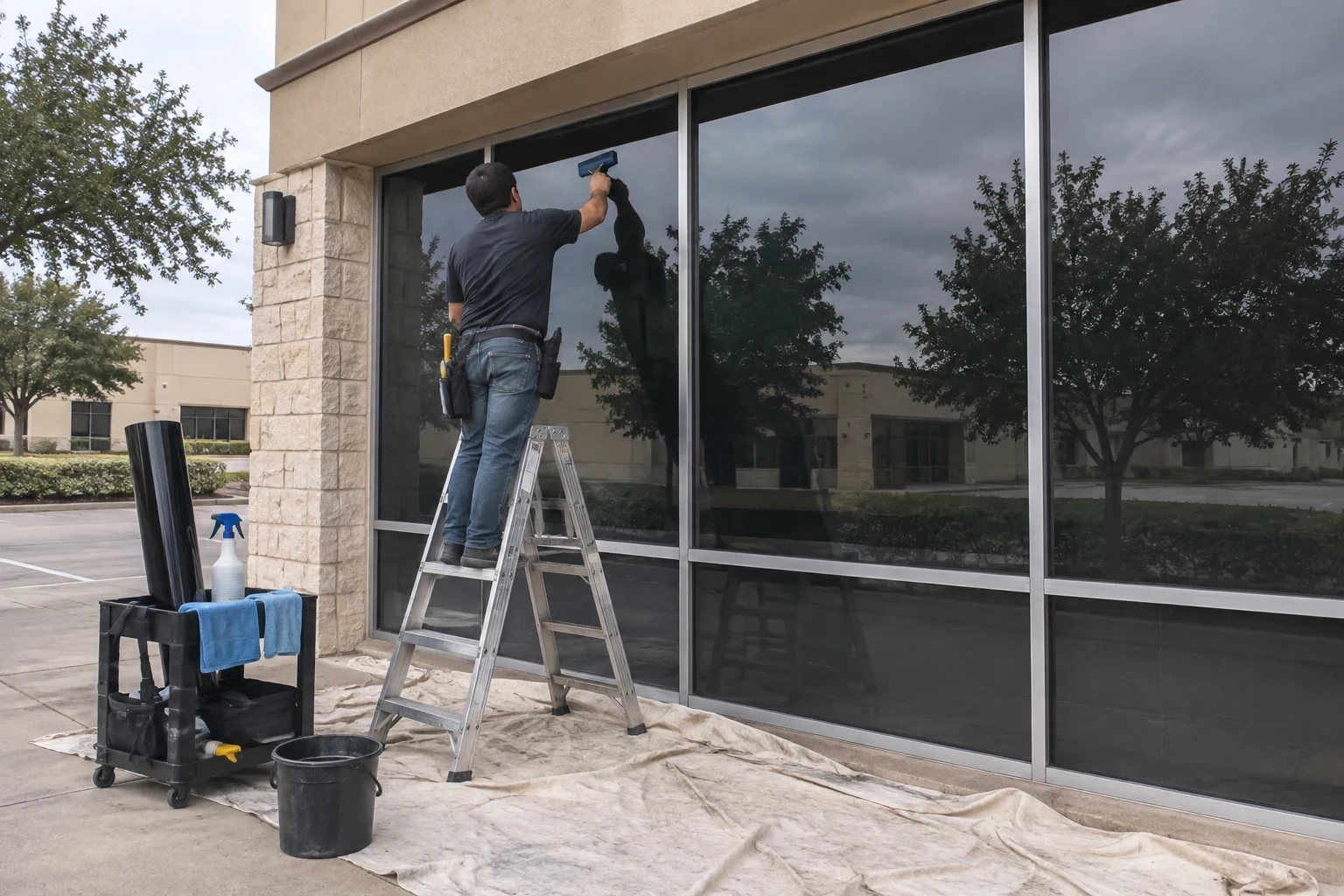
We install window film on storefronts, showrooms and small commercial buildings to cut solar heat, tame glare and slow UV fading. Before we recommend a film, we check the glass you actually have, including the replacement panes and old repairs that most buildings collect over the years.
Film that fits the building you have
Commercial window tinting is a thin, engineered film applied to the inside of your glass. The right film rejects a large share of solar heat, softens glare on screens and counters, and blocks nearly all UV, which is what fades merchandise, flooring and signage.
Most commercial spaces are not one uniform wall of glass. A storefront may have original annealed panes beside a tempered door, a dual-pane unit someone added later, and a window still carrying scraps of a film from a previous tenant. Each of those behaves differently under film, so we look at every opening before we suggest a product. On some glass the honest answer is a lighter film, or no film at all.
Interior suites and private offices have their own considerations, and we describe that work separately under office window tinting. Here the focus is the street-facing side of a business: storefronts, lobbies and showroom glass.
What the work includes
A pane-by-pane glass check
We identify whether each pane is annealed, tempered, laminated or dual-pane, and look for chips, edge damage and failed seals. Older and mixed glass is where the wrong film can cause stress cracks, so this step comes first.
Film matched to the goal
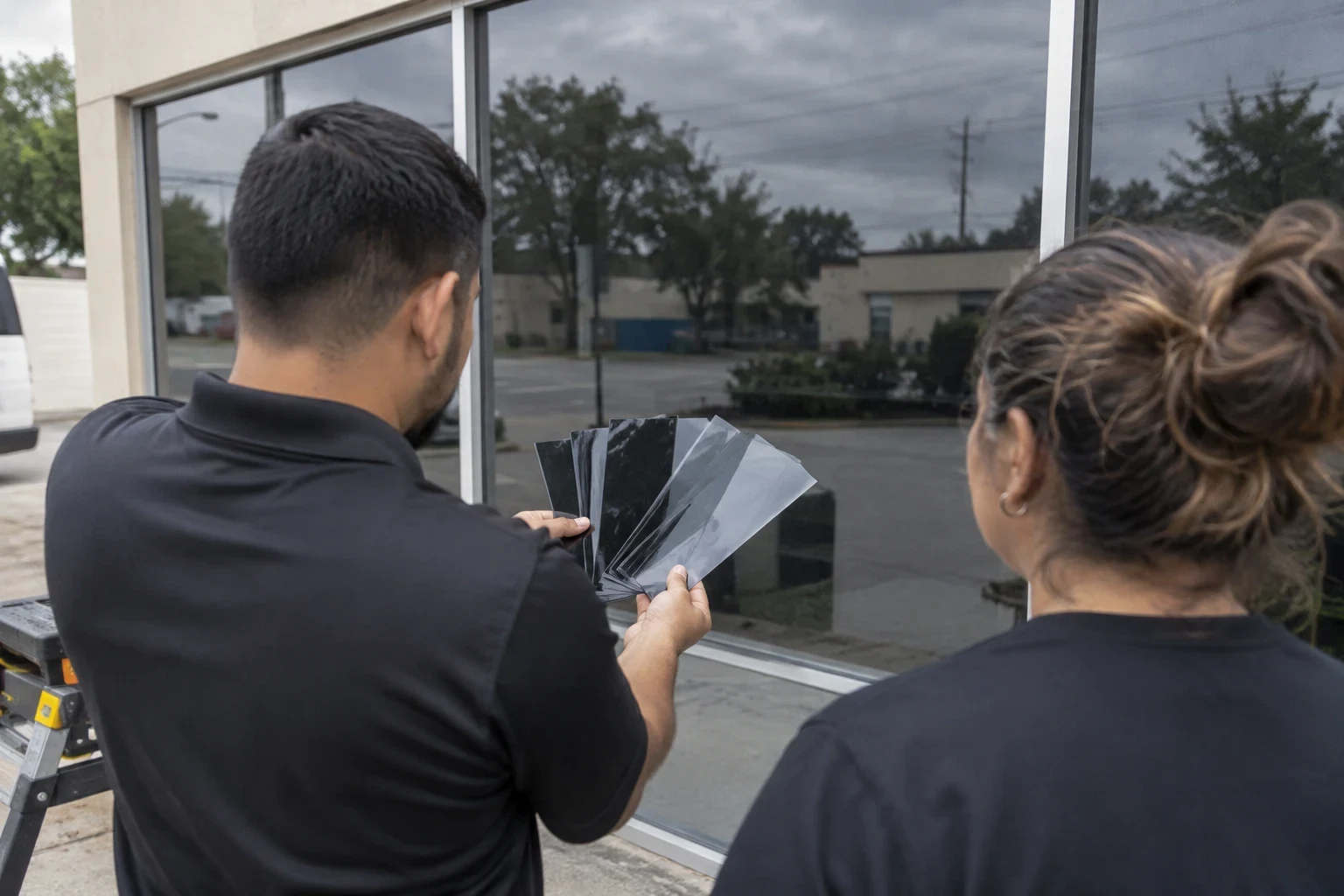
Heat rejection, glare reduction and privacy pull in different directions. We show you samples of ceramic film, reflective window film and non-reflective window film so you can see how each looks from the sidewalk and from behind the counter.
Removal of old film
Previous film that has bubbled, purpled or peeled is stripped and the adhesive cleaned off before anything new goes on. New film over old residue never lays flat.
Careful preparation
We clean the glass, scrape away paint flecks and old caulk smears near the edges, and protect displays, sills and flooring with drop cloths.
Clean edges and cleanup
Film is trimmed to a tight, even gap at the frame. When we leave, the glass is clean and the work area is put back the way we found it.
Signs your building could use window film
- Stock fading in the window
- Shirts, packaging or printed displays near the glass lose color within a season. UV is doing most of that damage.
- Staff squinting at screens
- Low afternoon sun washes out point-of-sale screens and monitors, and people end up taping paper over the glass.
- One side of the room runs hot
- West-facing storefronts can feel several degrees warmer than the back of the space through a long Gulf Coast summer, and the AC never quite catches up.
- Tired film from a past tenant
- Bubbles, peeling corners or a purple cast mean the old film has failed. It looks worn to customers and no longer does its job.
- Too much view in, not enough out
- Passersby can see straight into an office area or storage corner you would rather keep out of sight.
How a commercial install runs
- 1
Phone call and free quote
Give us a call, describe the windows and the one problem you would most like solved. We then set a time to measure, inspect the glass and bring film samples along.
- 2
Written recommendation
You get a clear write-up listing which panes get which film, any old film to remove, and any glass we suggest leaving alone and why.
- 3
Scheduling around your hours
We can plan the install for a slow morning, after close or across more than one visit so your doors stay open. Most storefronts are finished in a single working day.
- 4
Careful installation
Our insured installers prep, apply and trim the film, working section by section so only part of the space is disturbed at a time.
- 5
Curing and walkthrough
Film can look slightly hazy for a few days while moisture under it dries out. We walk the glass with you, explain the cure time and show you how to clean it.
What moves the price
We price from the windows you actually have, so the quote comes after we have measured and looked at the glass. A handful of factors decide the number, and each one is listed in writing so nothing new shows up later.
- Glass area and number of panes
- A few large panes go up quickly. A storefront made of many small divided lites needs more cutting and trimming for the same amount of glass, so it takes longer to finish.
- Which film you choose
- Ceramic film sits at the higher end because it turns away solar heat without making the glass much darker. Dyed and reflective films are generally less expensive to buy.
- Old film and the glass underneath
- Stripping a previous tenant's film, scrubbing off stubborn adhesive or working carefully around past repairs all add labor time.
- Hard-to-reach glass
- Transoms, tall upper windows and panes tucked behind built-in displays need extra setup. Some call for a lift or tall ladders, and the quote reflects that time.
- After-hours scheduling
- We can often work before you open or after you close, and that timing shapes how the job is staffed and planned.
Commercial window tinting questions
- Will window film crack the glass in an older storefront?
- It can if the film is wrong for the glass. Darker, high-absorbing films put thermal stress on some annealed and dual-pane units, especially ones with chipped edges. That is why we check each pane and recommend a film rated for it, or advise against film on glass we think is at risk.
- Do I need my landlord's approval?
- Many commercial leases require it, particularly for reflective film or anything that changes how the building looks from the street. We can give you samples and product details to share with your property manager before you commit.
- Can customers still see inside the shop?
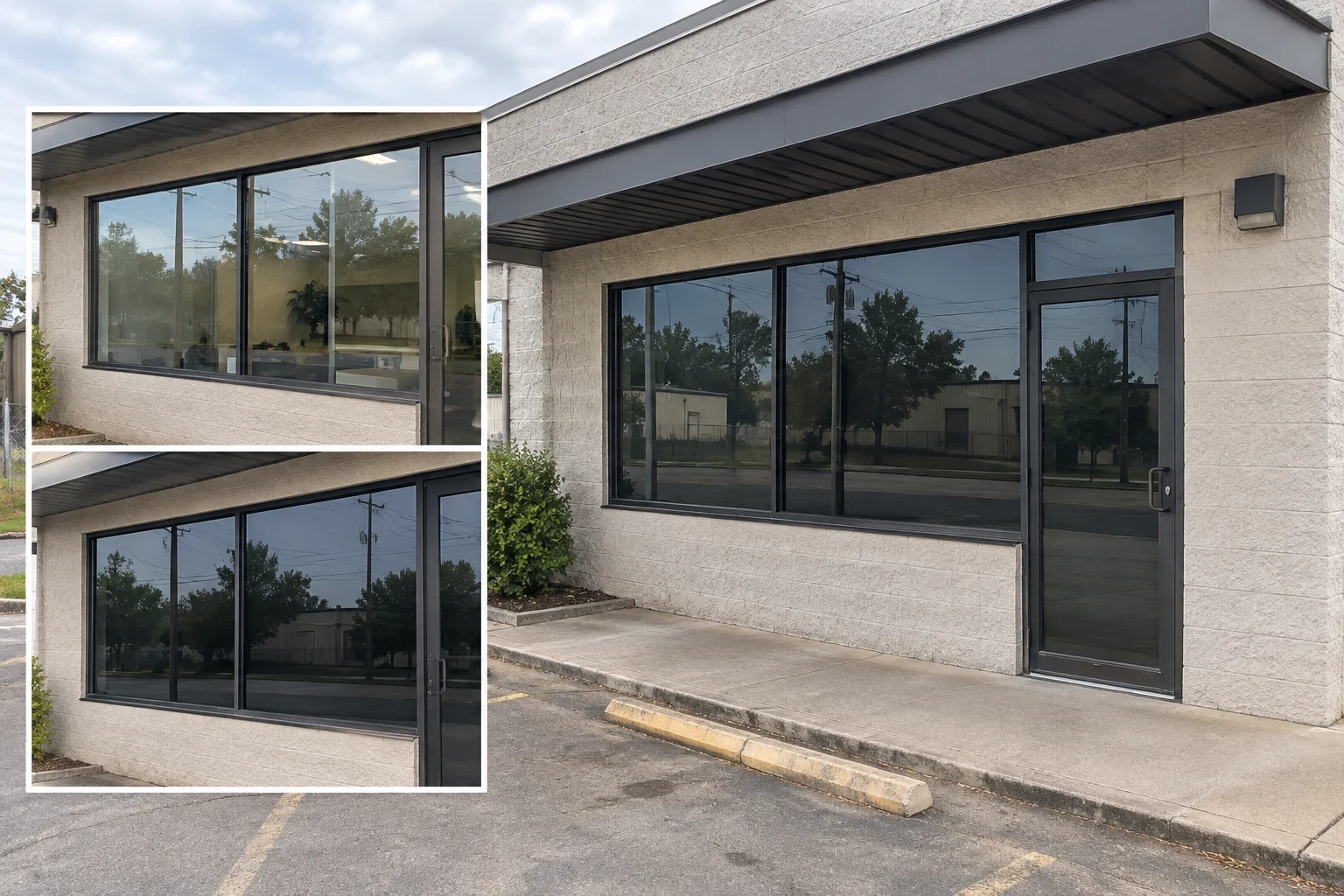
- Yes, if you want them to. A lighter ceramic film or a non-reflective film lowers heat and glare yet leaves the view open enough for window displays to show well. Reflective film adds daytime privacy, at the cost of how much people on the sidewalk can see.
- Will you need to close my business for the install?
- Usually not. We work in sections and can schedule around opening hours, and the film itself gives off no strong fumes. We will talk through timing during your free quote call.
- Who does the installation?
- Our own crew handles every step, from prep to final cleanup. They cover floors and fixtures before starting and leave the glass clean and the space tidy when they go.
Start with a look at your glass
Tell us which windows give you trouble and we will come measure, check the panes and show you samples on site. The quote is free and written out line by line.