ServicesNon-Reflective Window Film
Non-Reflective Window Film in South Houston
Non-reflective window film cuts heat, glare and UV while your glass still reads as ordinary glass. No mirror sheen outside, no dark cast inside. We check older panes, putty and past repairs first, then fit film that suits the window you actually have.
Film you feel more than you see
Many people want cooler rooms but dislike the shiny, one-way look of reflective film. Non-reflective film uses low-reflectivity layers, often ceramic or spectrally selective, to block a large share of solar heat and nearly all UV while keeping the view clear and the outside of the house unchanged.
It suits older homes especially well. A bungalow or ranch house with original wood sashes looks wrong behind mirrored glass, and some older panes are better served by a gentler film. Before we recommend anything, we look at the glass type, any replaced panes, the condition of the glazing and whether double-pane units have lost their seals.
It also fits offices and storefronts where a mirrored finish would feel cold or where nighttime reflections on the inside would bother staff.
What the work includes
- A close look at each window
- We check for cracks, chips at the edges, failing putty and fogged insulated units. Film should go on sound glass, and we tell you plainly if a pane needs attention first.
- Film matched to the glass
- Older single-pane, wavy or replaced glass handles heat differently than modern double-pane units. We choose a film with an absorption level that suits that glass, which helps avoid thermal stress.
- Samples on your windows
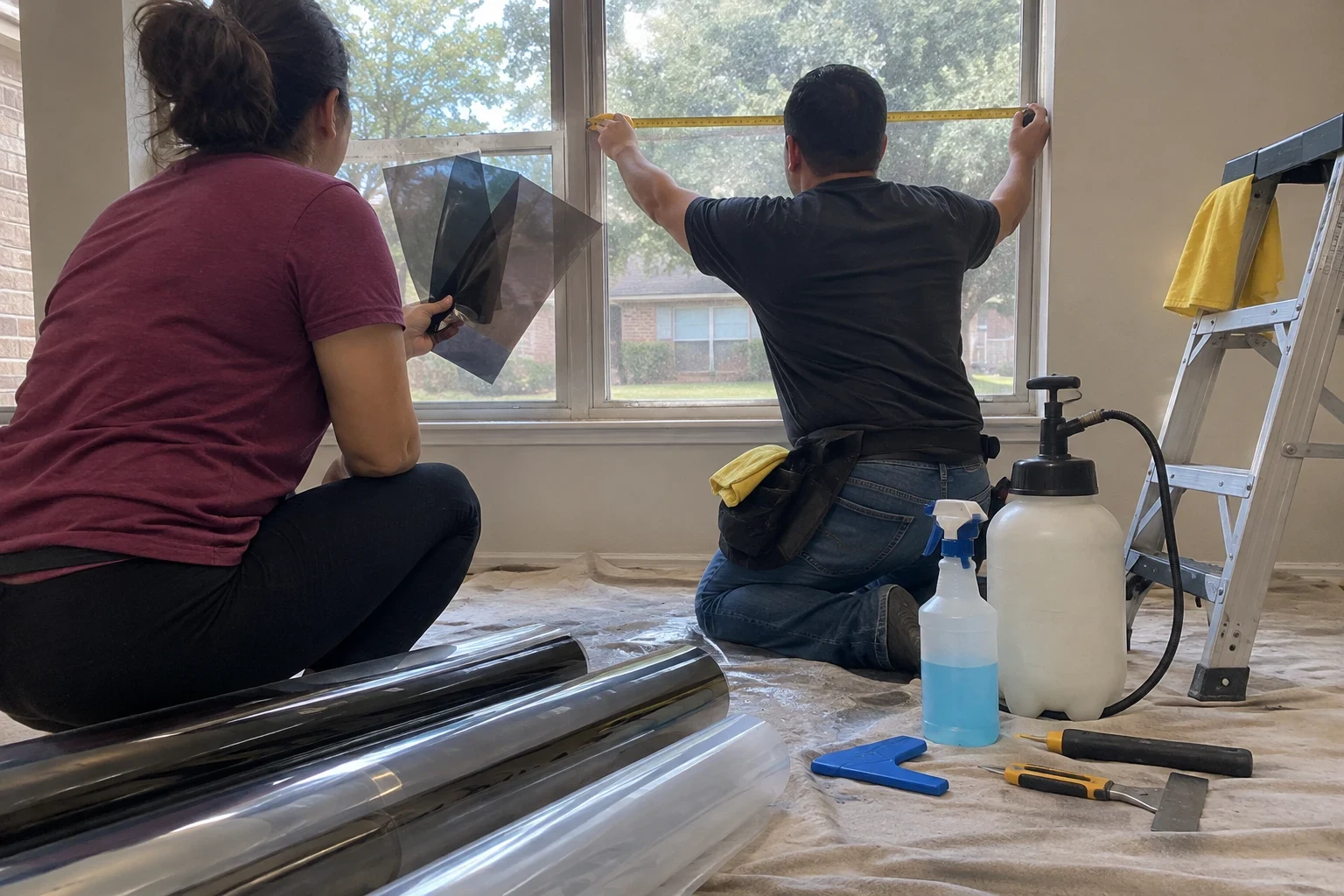
- We tape film samples right onto the panes in question. That way you judge tint and clarity under the light the room really gets, at the hour it bothers you most.
- Careful prep and protection
- Sills, floors and furniture near the window are covered. Glass is scraped and cleaned so old paint flecks and grime do not end up trapped under the film.
- Precise trimming around old frames
- Older wood frames are rarely square. We hand-trim each panel to the frame's real edges and around divided lites so the finish looks intentional, not patched.
Signs non-reflective film is the right choice
You want the house to look the same
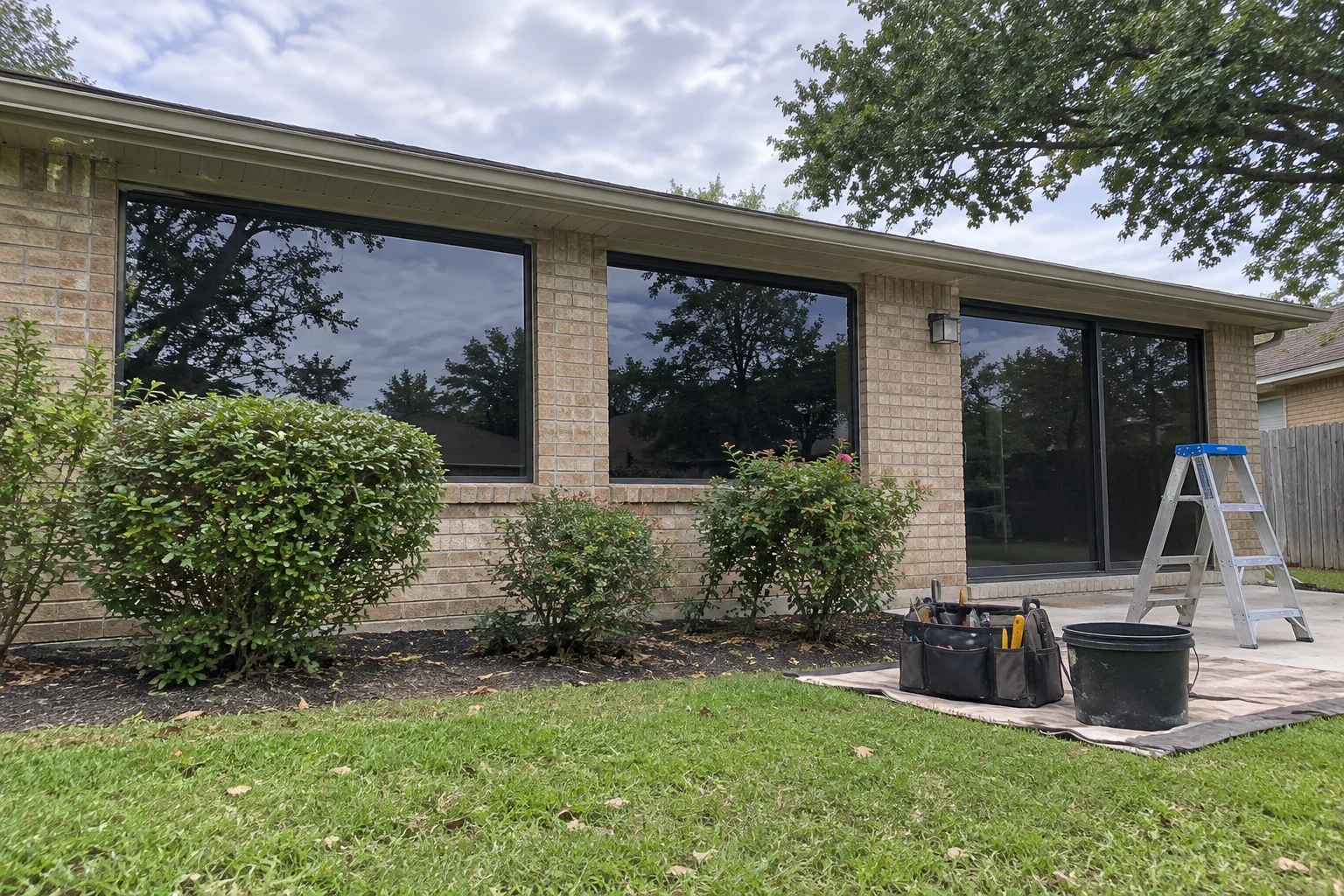
If a mirrored front would clash with the style of your home or your neighbors' homes, non-reflective film keeps the exterior looking like clear glass.
Rooms bake in the afternoon
West and south windows that make a room unusable after lunch are a good candidate. The film reduces solar heat without darkening the space.
Floors and fabrics are fading
Bleached rugs, wood floors and upholstery near windows point to UV exposure. This film blocks nearly all of it while light still comes through.
Glare on screens without wanting a dark room
You get glare reduction on TVs and monitors while the room still feels open and naturally lit.
Reflections inside at night bother you
Reflective films can turn windows into mirrors after dark. A low-reflectivity film keeps the view out at night closer to plain glass.
How a job runs
- 1
A conversation by phone
You tell us which rooms are the problem and what you want to keep about the look of the house. We set a time to come out.
- 2
In-home assessment and samples
We measure, inspect the glass and frames, and show samples on your windows. You get a clear written quote with each window listed.
- 3
Installation day
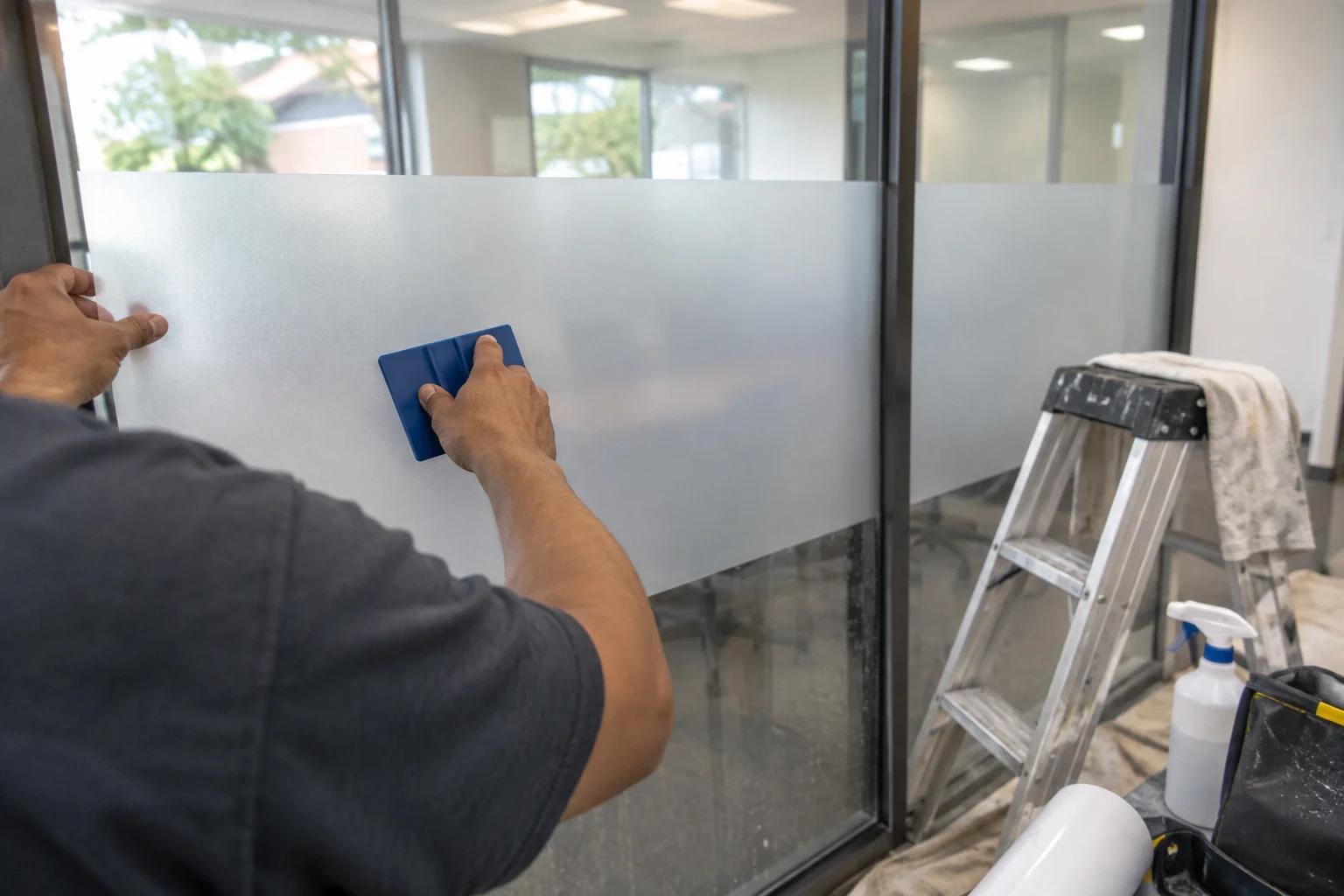
After covering the area around each window, we scrape and wash every pane until it is spotless. The film is floated into place on a wet mounting solution, pressed flat with a squeegee and cut to the frame. Most houses are finished in a single day, and we sweep and wipe down the work area before leaving.
- 4
Curing and follow-up
Small hazy spots or water pockets are normal for the first weeks and dry out on their own, faster in warm weather. We explain how to clean the film and when it is safe to start.
What affects the cost
Two things set most of the price: the square footage of glass and the film chosen for it. Older homes bring a few extra variables, so we price after seeing the windows in person instead of estimating blind. Your quote lists each window separately, so nothing on the final bill is unexpected.
- Total glass area
- Square footage drives both material and labor. A few large panes can cost less to film than many small ones.
- Film type
- Ceramic and spectrally selective non-reflective films cost more than basic dyed film. In return they give stronger heat rejection while keeping the glass clear.
- Divided lites and odd shapes
- Windows with muntins, arches or out-of-square frames need more hand trimming and more time.
- Condition of the glass
- Heavy paint overspray, old film that has to be stripped or failing putty all add prep work before new film can go on.
- Access
- Tall windows, stairwells and panes behind built-ins may need ladders or extra setup.
Questions about non-reflective film
Something not covered here? (713) 842-9013
Will it still keep my rooms cooler without the mirror look?
Yes. Modern ceramic and spectrally selective films reject heat by absorbing and filtering infrared instead of bouncing visible light back out. You get real heat rejection with glass that looks clear from the street.
Is it safe for the old single-pane glass in my house?
Usually, as long as the glass is sound and the film is chosen for it. We check for edge chips and cracks first, since damaged glass is more prone to stress cracking under any film. If a pane is not a good candidate, we will say so.
My double-pane windows look foggy between the panes. Can film fix that?
No. Fogging means the seal has failed, and film cannot repair it. We will point it out during the visit so you can decide whether to replace that unit before or after the rest of the windows are filmed.
Is there a warranty?
Yes. Our home window tinting is backed by a lifetime warranty. When you get your quote, we walk through the terms in plain language so you know exactly what is covered.
Who does the installation?
Our own installers do the work, and they are insured. They cover your floors and furnishings before starting and tidy up once the film is in.
How does this compare with reflective film?
Reflective film usually rejects more heat on the hottest exposures, but it looks mirrored from outside and reflects the room back at you at night. Non-reflective film gives up a little of that performance for a natural appearance. Our Reflective Window Film page covers the other option if you want to compare.
See it on your own windows
We will bring samples, look over the glass and frames, and give you a written quote you can think over. Work is scheduled around you in South Houston and nearby towns like Pasadena and Pearland.